
Hi, I am a new poster for Leading LEED, Ankit Bhardwaj. I am a Civil Engineering student at University of Toronto, and I am interested on sustainable urban design. I have lived in the cities of Kuala Lumpur, Singapore and Tokyo.
Lorinc’s “How Toronto Lost Its Groove” paints a bleak picture of Toronto’s public infrastructure development over the past decades. It has been a story of political attrition: both between ideologies and strata of government and society. He particularly brandishes fiscally conservative – in the case of Mayor Rob Ford, blatantly and ignorantly conservative - ideologies and their particular strangling effects on public infrastructure. He sees them as short-sighted and dis-analogous to ”forward-looking cities in Europe, Asia, and Latin America, spending on public transit”. The article is a meditation. An engaging and fantastic account on the cornucopia of mistakes,delays and changes Toronto municipality governments, Ontario provincial governments and the Canada federal government have made; hindering Toronto’s infrastructure development. It does brilliantly to elaborate on the bureaucratic and political process, urban planning and civil engineering projects have to go through. Learning about this essential process, I believe, is void in our education which teaches us to optimize solutions only technically.
Toronto Urban density map - Might as well show political leanings.
The divide between the “905 clique” – see Markham, Ajax- Pickering, Mississauga, Richmond-Hill, Brampton – and the City of Toronto itself - in municipality governance and lifestyle – has led to a social divide: the more densely populated, public-transit minded core versus that of the generic, car-dependant “Sprawlville” suburb so analogous to N.American cities. ( I do little to hide by bias). It is fascinatingly interesting, but possibly out of the scope of this blog-post, that city infrastructure might have a direct relationship with the political leanings of its inhabitants. Can infrastructure facilitate larger – more metaphysical goals – of societal unity and “progress”? The current urban infrastructure buzzword seems to be “livability”. There has been an appropriate effort to mould new city infrastructure for the use of people.
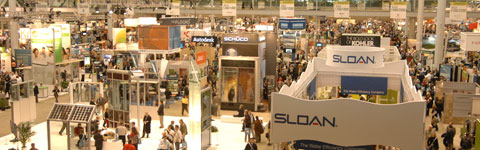
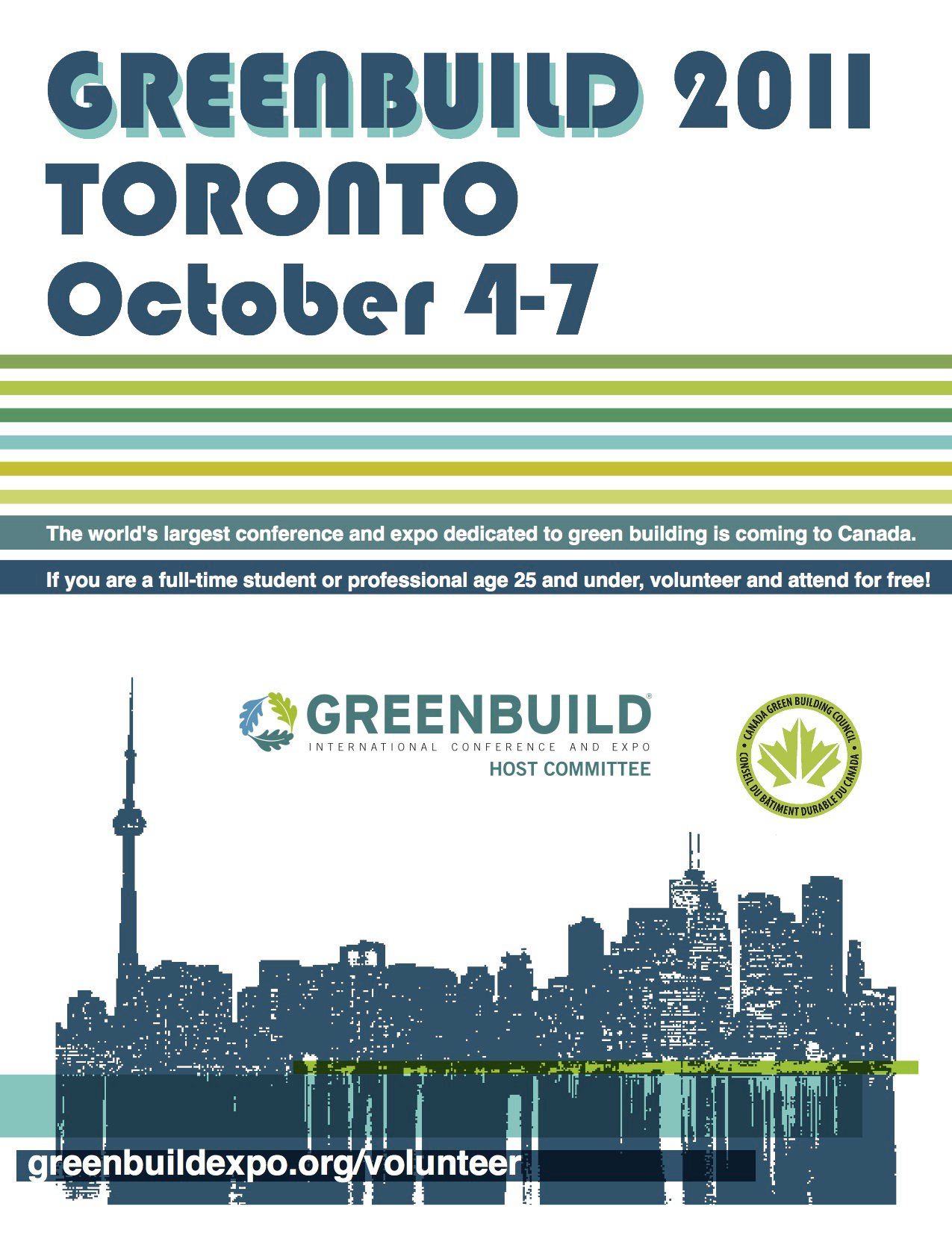
Lorinc has a belief in Toronto to achieve greatness. It rests in “abundance of talent and energy, tremendous wealth, and intimations of a distinctly Canadian cosmopolitanism” which in turn juxtaposes its infrastructure-hindering, political apathy and city council workings. This has been reflected in the private, LEED-achieving works, the city has produced such as the Evergreen Brickworks. Toronto also graciously hosted this year’s Greenbuild conference – surely a sign of the cities infrastructure ethos?
An Urban Oasis: Evergreen Brick Works in Toronto from DiamondSchmittArchitects on Vimeo.
Lorinc remains bleak and somewhat cynical on the city’s renewed efforts to revitalize infrastructure, such as the highly acclaimed gentrification of the dockyards led by Waterfront Toronto. He cites the failed double helix bridge - connecting King West and Fort York over the train yard- as a sign of Toronto’s good will concerning infrastructure projects, but due to political constraints, inability to address them. He is not of minority. Former councilman Kyle Rae reflected on Toronto with “We live in a culture that undervalues the public realm.” There have been past failures, however anything south of Front St. has been seeing an upward trend in development: catalysed by the efforts of Waterfront Toronto. Toronto is consciously redesigning Front St., to increase walk-ability and pedestrian friendliness. Small increments on public transit have also been made by BIXI.

Toronto is ambitious. There are no doubts about that. The recent Walrus Project debates – Be It Resolved That Toronto Will Never Be Beautiful – showed the city’s concern on the topic. For a city to be truly beautiful, it must be liveable. Beauty of a city is multi-dimensional. It is not just about the aesthetics, but of the “feel”: that synergy, that pulsating aura that exudes through everything, Lorinc’s “Groove”. Great cities have it. New York has it. Paris and London have it. By god, Tokyo has it. Urban infrastructure itself is at the forefront of manipulating this. It facilitates trade, economic gain, creativity, interaction and communication. Bridges were built not for us to ogle them – though it is a great side-effect – but to facilitate these essential societal needs. For Toronto to achieve the status of urban greatness, which it has inklings for, it must, along with the provincial and Federal governments, develop its urban infrastructure at a scale worthy of its aspirations.


.COM


Comment!